



Danitrio Two Golden Pheasants Maki-E on Hyotan Fountain Pen
Starting at $900/mo for 6 month no-interest installments, 10% down using 
Learn about our Payment Relief Plan. |
|---|
Couldn't load pickup availability
✓ 100% Genuine Urushi
✓ Hand-painted by highly-trained Japanese Artisans
The golden pheasant was first imported into Japan from China during the Edo period through the trading port of Nagasaki. Because of its vibrant, striking plumage, the exotic bird quickly captured the imagination of artists. It frequently appeared as a symbol of beauty in traditional flower-and-bird woodblock prints (kachoga).
Two golden pheasants appear in mid-motion, their wings spread wide, creating a dynamic sense of balance and mirrored harmony along the pen’s body. Subtle variations in shimmer and color give the surface a warm, glowing depth that changes beautifully with the light. Flowing feather details and soft, cloud-like patterns add elegance and visual rhythm without overwhelming the composition. Finished with refined gold elements, the pen presents a bold yet sophisticated presence.
About Danitrio Hyotan Fountain Pen Series:
The Hyotan in Japanese means "Gourd" or "Calabash", which is a fruit that can sometimes come in an hourglass shape. This series of pen does come in the hourglass shape; in the US, collectors of Danitrio pens have coined it the Mae West, one of the biggest Hollywood stars in the twentieth century known for her hourglass figure.
Nib Details:
Note: The uncapped pen picture depicts a retro T-nib; however, this pen can be fitted with the current standard #6 nib shown below.
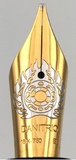
This pen is furnished with an 18k Gold, two-toned #6 nib. What has been described by many Danitrio collectors as the fireball nib is an image of “Kaen-Kohai” which is a flame-shaped halo of “Fudo Myoo” (Acala, the God of Fire). This halo is commonly painted on the back of Japanese Buddhist statues.
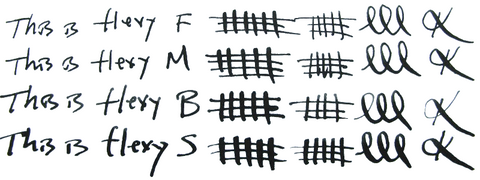
An UrushiPen.com representative will contact you to confirm nib tip size preference (fine, medium, broad, or stub) following the placement of the order.
Technical Specification:
| Cap Length | 65 mm (2.56") |
| Cap Diameter | 21 mm (0.83") |
| Barrel Length | 110 mm (4.33") |
| Barrel Diameter | 19 mm (0.75") |
| Pen Length (Closed) | 147 mm (5.79") |
| Pen Length (Posted) | Cap does not post |
| Net Weight | 35.5 g (1.25 oz) |
| Net Weight (w/ink) | 37.2 g (1.31 oz) |
| Filling System | Cartridge/Converter |
About the Artisan:

This pen was hand-painted by Koichiro Okazaki (Kogaku). Born in 1959. He is a renown Maki-E artisan in Japan and considers himself wholeheartedly traditional when it comes to Maki-E. He is recognized by the Japanese Government as a Dento Kogei-shi, which an honorary title meaning "master of traditional crafts" and is given only to a select few artisans who have a significant contribution to their craft. Many of his Maki-E works have been accepted and rewarded at national art exhibitions. He had learned Maki-E from a master and became an independent artisan 5 years later. He was recognized with Kao (authorized monogram) by Kuda Munenori of Sado Omote school in 1991. He performs Maki-E on many traditional accessories, hair pins, combs, jewelry, and fine writing instruments.